
Bundled payments have two different forms of models which are APMs and EPMs. APMs stands for alternative payment models which basically strive to improve the quality of care at lower costs for the patients. EPMs sands for episode payment models which require providers to anticipate any kind of possible risk which may occur due to any patient being readmitted into the hospital and/or any complications that may arise during a surgery.
Of course, when it comes to bundled payments, we have to look at the patient’s age and what they are at risk for based on their age in addition to diseases or problems they may have whether it is hereditary or personal.
I think bundled payments in the recent years, have had significant impacts on our lives as healthcare providers and even on the lives of our patients due to the their potential for reward. There are many different factors that affect bundled payments which can include physicians, patient care coordinators, building pathways, increasing mobility amongst patients in need, and several others as well.
In addition, I read that large employers were drowning in the high insurance costs and started to negotiate bundle pricing directly. These factors indicate that bundled payments will remain an APM or an alternative payment model. Not only that, but these types of payments can really come in handy for certain kinds of patients for example who are at high risk and need high costing procedures and operations done immediately or in a timely manner.
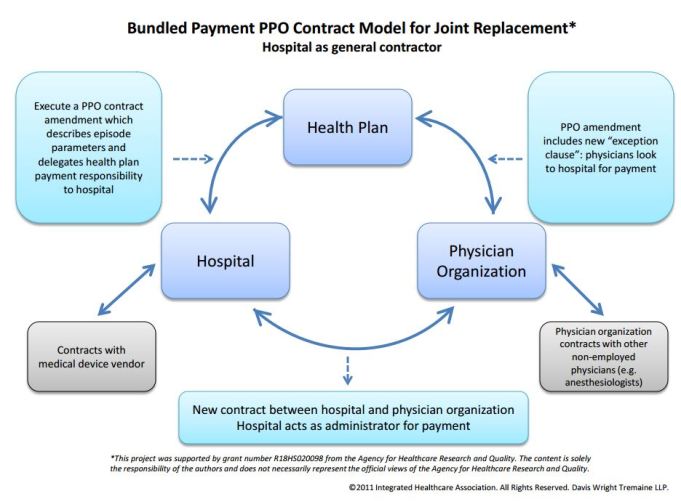
All in all, I feel that bundled payments are definitely a growing commodity that will soon become so popular that everyone will find a way to utilize it and take advantage of it’s perks. Below, is an example of a model that shows what a bundled payment looks like in case its easier to understand. This chart is just describing a general example of a bundled payment if it happened to be for a joint replacement.
Sources:
- https://healthpayerintelligence.com/news/top-4-factors-necessary-for-bundled-payment-model-contract (Picture)
 Iman's Blog